

What is BiDiAr
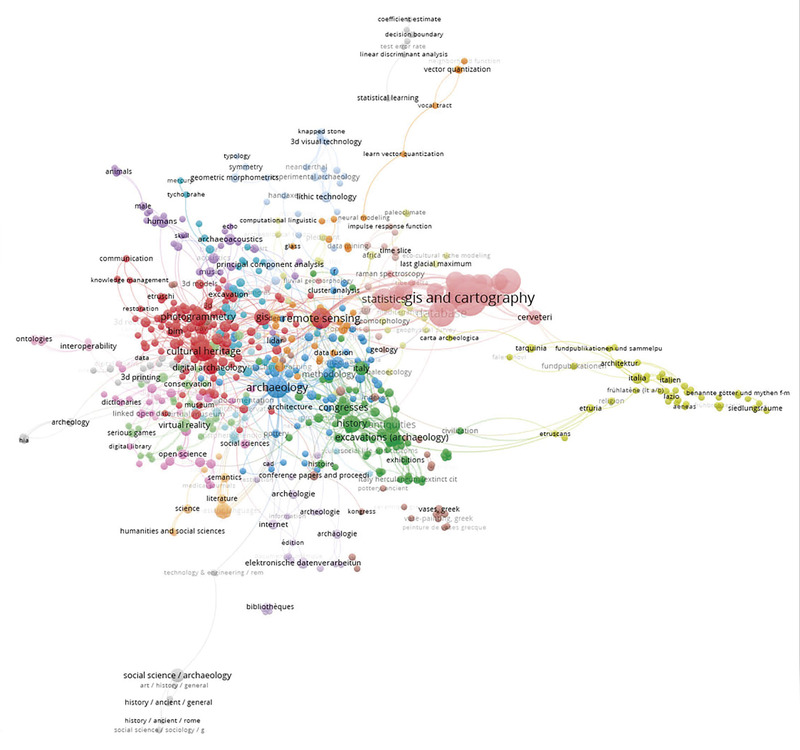
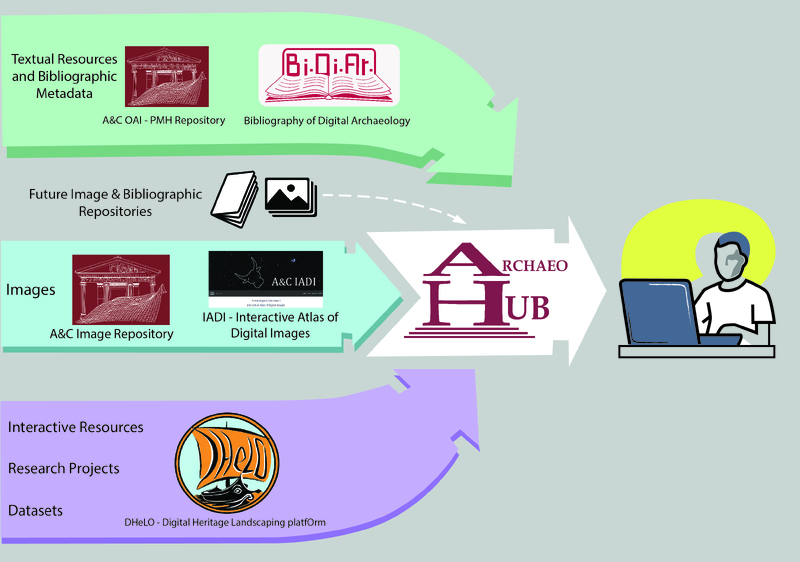
BiDiAr (Bibliography of Digital Archaeology) is an open-access bibliographic database that collects, organises, and enriches references related to digital methods and tools in archaeology. Developed using Zotero and integrated into the DHeLO infrastructure, BiDiAr indexes scientific literature with structured metadata, linking bibliographic entries to associated datasets, projects, and software. It serves as both a research tool and a knowledge base, tracing the development of digital archaeology over time. With over 10,000 records, BiDiAr provides a critical resource for scholars seeking to understand how digital practices have shaped archaeological research and heritage documentation across various contexts.
BiDiAr on Zotero
BiDiAr provides a dedicated Zotero Library, where all bibliographic records included in the platform are collected and openly accessible. Each entry on the BiDiAr website includes a direct link to the corresponding Zotero record. Bibliographic resources can be explored both on this site and via Zotero, to accommodate different consultation needs and usage contexts.
The library is regularly updated and structured to support browsing, search, and interoperability with other digital tools, thus facilitating the reuse of data in scholarly contexts.
Zotero is a free and open-source reference management software developed by the Roy Rosenzweig Center for History and New Media at George Mason University (Virginia, USA). It allows users to collect, organize, cite, and share bibliographic data and research materials collaboratively, making it a valuable tool for managing digital scholarship.
The H2IOSC Project

BiDiAr was developed within H2IOSC (Humanities and Cultural Heritage Italian Open Science Cloud), a pioneering project to create a collaborative cluster of European distributed research infrastructures involved in the humanities and cultural heritage sectors with operating nodes across Italy.
Through the enhancement and federation of CLARIN-IT, DARIAH-IT, E-RIHS.it and OPERAS-IT, the four Italian nodes of the European Research Infrastructures committed in the Social Science and Humanities domain, H2IOSC will provide researchers, businesses, and citizens with an open and multidisciplinary environment that enables access to advanced tools for conducting innovative and computationally intensive research on complex digital data and objects.
E-RIHS.it, coordinated by the CNR ISPC – Institute of Heritage Science, leads the collaboration between the research infrastructures of the H2IOSC Cluster.