

Items
-
Academic ArticleDocumentare l’archeologia da Burnum (Sebenico, Croazia) a Suasa (Ancona): una tradizione rinnovataRecently, the team of researchers who collaborate with the journal ‘Groma’ was involved in two major archaeological projects relating to abandoned Roman towns in the Adriatic area: Burnum (Šibenik, Croatia) and Suasa (Ancona, Italy). The Burnum Project is primarily a remote sensing research project that aims at promoting the archaeological heritage of the site. The main results have already been presented during the first edition of the Workshop (2011). The Roman town of Suasa is located in the middle valley of the Cesano River, in the northern Marche region. The Department of Archaeology of Bologna University has spent over twenty years conducting archaeological excavations and multidisciplinary studies in the site. The present paper focuses on the new season of research, which involves new tools and methods for the analysis and documentation of the site and its territory. In particular, in recent years there has been an increased use of remote sensing techniques and the systematic management of the new data excavations through an innovative webGIS system. The integration of historical and modern aerial photographs, finalized aerial photogrammetry, new aerial and geophysical survey, made it possible to identify several buildings in the urban area and to locate the most important elements of the ancient topography in the suburban area. The large amount of archaeological data acquired from the excavations and from remote sensing techniques was managed by webGIS technology, which made it possible to conduct different levels of analysis.
-
Academic Article
-
Academic ArticleDocumentare l'invisibile. Il progetto Çuka e Ajtoit: rilievo e documentazione di un sito d'alturaThe site of Çuka e Ajtoit is located at the southern edge of present Albania, on the Greek border, and it has a rather long tradition od studies, that for different reasons are still today poorly published. The monumental fortifications of the Hellenistic city, built in polygonal and trapezoidal massive masonry, are by far the most impressive features of the site, and have attracted the attention of scholars. These pertectly fit the steep slopes of the isolated hill, a natural control point of the surrounding area, known in antiquity as Kestrine and located between ancient Chaonia and Thesprotia. Since 2021 a new joint archacological mission of Sapienza University of Rome and Albanian Institute for Archaeology has started new field activities that since their inception have contributed in shedding new light on the archaeology of the site. New technologies for the topographical survey and the documentation are being deployed to offer a diachronic view of the site and an integrated comprehension of both archive and newly acquired data. The methodologies and the first results of the fieldwork are the main focus of this paper.
-
Academic ArticleDo-It-Yourself digital archaeology: Introduction and practical applications of photography and photogrammetry for the 2D and 3D representation of small objects and artefactsPhotography and photogrammetry have recently become among the most widespread and preferred visualisation methods for the representation of small objects and artefacts. People want to see the past, not only know about it; and the ability to visualise objects into virtually realistic representations is fundamental for researchers, students and educators. Here, we present two new methods, the ‘Small Object and Artefact Photography’ (‘SOAP’) and the ‘High Resolution “DIY” Photogrammetry’ (‘HRP’) protocols. The ‘SOAP’ protocol involves the photographic application of modern digital techniques for the representation of any small object. The ‘HRP’ protocol involves the photographic capturing, digital reconstruction and three-dimensional representation of small objects. These protocols follow optimised step-by-step explanations for the production of high-resolution two- and three-dimensional object imaging, achievable with minimal practice and access to basic equipment and softwares. These methods were developed to allow anyone to easily and inexpensively produce high-quality images and models for any use, from simple graphic visualisations to complex analytical, statistical and spatial analyses.
-
conference paperDo players prefer integrated user interfaces? A qualitative study of game UI design issuesWith basis in a qualitative player study, this paper presents different player attitudes concerning user interface elements. The paper focuses on how the game user interface influences the players’ involvement in the game, and how the players navigate between different sources of involvement. We argue that there is no necessary connection between a transparent interface and involvement, and that in many cases, overlay interfaces are preferred due to the clear information they present. With point of departure in Ermi & Mäyra’s (2005) view of player involvement as a complex phenomenon, and Jørgensen’s (2010; forthcoming) research into the relationship between game user interfaces and the gameworld, we discuss how players in our qualitative study see involvement with respect to how the game UI is presented. This framework also enables us to discuss user interface design as a balancing act between aesthetics and mechanics, as the choice between transparent or superimposed interface features is a way to represent system information within the game context.
-
 Software
 -
Academic ArticleDizionario dei soggetti e Thesaurus di Toponomastica Archeologica (TTA)The Dictionary of Subjects and the TTA are the results of the cataloguing of bibliographical resources. The TTA is a source of archaeological sites (8000 sites in the Mediterranean area, mostly in Tuscany) indexed by category. In TTA a place-name is the logical focus of a record. The record place-name includes the preferred place-name, the variant names and the historical names, the note that provides archaeological information about the place, the relative position in the administrative division of the State, the geographic coordinates (UTM or Gauss Boaga) and the bibliographic sources. The purpose of the TTA is to contribute to the knowledge of the topographical distribution of ancient peoples, with the advantage that the administrative subdivisions reflect those used by the Italian Institutes responsible for cultural heritage.
-
Academic ArticleDIY and digital archaeology: what are you doing to participate?The power and the promise of digital technology provides the opportunity to revolutionise the way we think about and do archaeology. This opportunity has been seized by a few enterprising archaeologists, but can only be fully realised when a culture of participation and sharing is fostered in both academic and professional realms. Digital literacy and critical digital media object creation cannot be the realm of only a few heritage professionals, but should be cultivated and rewarded as we create new publication standards throughout archaeology. We present the background of digital participatory culture, the current entanglement of open source, open access, and for-profit technology in archaeology, and offer a challenge: to create a more ubiquitous, reflexive, open and participatory archaeology on both the institutional and the individual level.
-
Academic Article
-
Academic ArticleDistant Reading Through Ontologies: The Case Study of Catania’s Benedictines MonasteryIn this contribution, we developed a Linked Open Dataset, more specifically an OWL ontology, about the history of the renovation of the Catania’s Benedictines Monastery by the architect Giancarlo De Carlo. We considered a wide subset of public and private documents collected from 1977 to 2006 during the process of restoration and adaptation of the monastery to a campus for the University of Catania.The task of modelling and population of the ontology have been carried out from the analysis of documents stored in the “Archivio del Museo della Fabbrica”, in the new archive of professor Giuseppe Giarrizzo, in the private collection of Antonino Leonardi, and from the conceptual map of the locations of the monastery.
-
 Academic ArticleDisséquer l’ornement, interpréter l’hybridité humano-végétale. Diphuès – Une base de données polyvalenteThe Diphuès database is an open access research, exchange and dialogue tool devoted to the half-human half-vegetal figures in Roman Antiquity. It is the result of two research projects that have been carried out since 2012 under the aegis of the F.R.S.-FNRS (Fonds de la recherche scientifique de Belgique). From 2024, it will be made available in open access to the international scientific community by the ‘Service d’Histoire de l’art et Archéologie de l’Antiquité gréco-romaine’ (SHAArAGR) and the ‘Centre Informatique de Philosophie & Lettres’ (CIPL) of the University of Liège. Diphuès is based on a corpus originally designed as a personal work tool to serve specific research objectives. This tool has undergone several major modifications, in its structure and purpose, so that it can be used to produce new knowledge. Its network application is seen as the final stage in the research communication process and is part of a wider effort to share knowledge and resources.
 -
Academic ArticleDispersione dei materiali archeologici e interpretazione: il contributo del GIS IdrisiThe author illustrates the results of a research project on the scattered sherd dispersion in the Lower Sangro Valley, where he has supervised a survey since 1995. While a number of dispersion causes have been detected, the author analyses here only the effects of meteoric water spill and of the agricultural work on the landscape. The analysis was performed using the DISPERSE module of the GIS Idrisi 2.0 for Windows.
-
conference paperDisentangling Sedimentary Pathways for the Pleniglacial Lower Danube Loess Based on Geochemical SignaturesThe source of aeolian sediments such as loess has been investigated since decades. Reliable knowledge on potential dust sources is crucial to understand past climatic and environmental conditions accompanying the dispersal of early modern humans (EMH) into Europe. Provenance studies are usually performed on small sample sets and most established methods are expensive and time-consuming. Here, we present the results of high-resolution geochemical analyses performed on five loess-palaeosol sequences from the Lower Danube Basin (LDB), a region, despite its importance as a trajectory for EMH, largely underrepresented in loess provenance studies. We compare our results with geochemical data of loess-palaeosol sequences from Austria, Hungary, Serbia, and Ukraine. Based on published literature, we thus evaluate five plausible sedimentary pathways for the LDB loess: 1) the Danube alluvium (DA) pathway, which constrains the transport and re-deposition of detrital material by the Danube and its tributaries; 2) the Carpathian Bending (CB) pathway, where sediment is mainly transported from the Cretaceous to Neogene flysch of the Eastern Carpathian Bending; 3) the Eastern Carpathian (EC) pathway, in which sediment is eroded from the flysch of the Outer Eastern Carpathians, transported by rivers, and deflated by northwesterly to westerly winds; 4) the glaciofluvial (GF) pathway, where dust is deflated from glacial outwash plains in nowadays Ukraine, and 5) the Black Sea (BS) pathway, where dust originates from the exposed shelf of the Black Sea. Based on geochemical data, we consider the DA pathway to be the major sediment trajectory for loess in the LDB. Especially the sequences located close to the Danube and the Dobrogea show similarities to sites in Central and Northeast Hungary as well as Northern Serbia. For the northeastern part of the LDB, we demonstrate that dust input is mainly sourced from primary material from the Eastern Carpathians. Mineralogical estimations and geochemical data render the CB pathway as an additional substantial source of detrital material for the loess of this area. We consider the influence of the GF pathway in the LDB as negligible, whereas some minor influences of the BS pathway cannot be ruled out based on geochemical data.
-
BookDisegno come modelloArchitettura
-
Academic ArticleDisease and Water Supply: The Case of Cholera in 19th Century IranTo make use of the limited amounts of water in arid region, the Iranians developed man-made underground water channels called qanats (kanats) .In fact, qanats may be considered as the first long-distance water transfer system. Qanats are an ancient water transfer system found in arid regions wherein groundwater from mountainous areas, aquifers and sometimes from rivers, was brought to points of re-emergence such as an oasis, through one or more underground tunnels. The tunnels, many of which were kilometers in length, had designed for slopes to provide gravitational flow. The tunnels allowed water to drain out to the surface by gravity to supply water to lower and flatter agricultural land. Qanats have been an ancient, sustainable system facilitating the harvesting of water for centuries in Iran, and more than 35 additional countries of the world such as India, Arabia, Egypt, North Africa, Spain and even to New world. There are about 22000 qanats in Iran with 274000 kilometers of underground conduits all built by manual labor. The amount of water of the usable qanats of Iran produce is altogether 750 to 1000 cubic meter per second. The longest chain of qanat is situated in Gonabad region in Khorasan province. It is 70 kilometers long. Qanats are renewable water supply systems that have sustained agricultural settlement on the Iranian plateau for millennia. The great advantages of Qanats are no evaporation during transit, little seepage , no raising of the water- table and no pollution in the area surrounding the conduits. Qanat systems have a profound influence on the lives of the water users in Iran, and conform to Iran's climate. Qanat allows those living in a desert environment adjacent to a mountain watershed to create a large oasis in an otherwise stark environment. This paper explains qanats structure designs, their history, objectives causing their creation, construction materials, locations and their importance in different times, as well as their present sustainable role in Iran.
-
Academic ArticleDiscretizzazione e modello-dati nei sistemi GISReview article.
-
Academic ArticleDiscovering Chan Chan: modern technologies for urban and architectural analysisSince 2002, the Italian Mission of CNR-ITABC has been operating in the archaeological complex of Chan Chan (Peru), which is the largest pre-Columbian settlement entirely built with adobe. In 1989 Chan Chan was placed on the UNESCO World Heritage List. The main purpose of the work is aimed at the conservation, documentation and use of the site and of the territory that is related to Chan Chan from a historical and cultural point of view. The urban structure of Chan Chan, which is spread over a surface of 14 km2, has a number of buildings which characterizes the town at both an architectural (ciudadelas, huacas, huachaques) and decorative level (bas-reliefs, geometrical motifs). In order to achieve our research goals, we had to arrange for the combined use of various analysis techniques that would provide both urban and architectural information about the town. The data we obtained allowed us to make a more up-to-date interpretation of the urban fabric and revealed intriguing details regarding the construction phases of one of its palaces which will be helpful both for the planning of the Archaeological Park and the restoration project of the Palacio Rivero.
-
Academic Article
-
Person
-
BookDipingere l’Etruria. Le riproduzioni delle pitture etrusche di Augusto Guido Gatti.Viene presentato il corpus delle riproduzioni di pitture etrusche eseguite da Augusto Guido Gatti (1863-1947): disegni, lucidi e tele in scala 1:1 che raffigurano le più celebri tombe dipinte del mondo etrusco allora conosciute. La Galleria delle pitture etrusche in facsimile, destinata ad una sezione del Museo Archeologico di Firenze a partire dal 1928, è stata l’ultima esperienza museale di questo tipo, dopo quelle del Gregoriano, di Monaco, Bologna, Orvieto e Copenaghen. Ponendo una particolare attenzione alla storia della riproduzione, il volume illustra il lavoro del disegnatore fiorentino con l’intento non solo di far conoscere una tematica museologica, ma anche di fornire documentazione inedita su monumenti pittorici oggi fortemente deteriorati o addirittura non più esistenti. Il catalogo di 325 documenti è consultabile anche nella banca dati ICAR (http://icar.huma-num.fr).
-
Person
-
Person
-
Academic ArticleDinamiche di scambio nel Mediterraneo antico: il caso di CerveteriThe ISCIMA-CNR has participated in the FIRB 2001 Project with research on “Trade dynamics in the ancient Mediterranean: the role of Etruria”. This title raises a number of diverse issues: continuity and discontinuity in trading circuits in the Mediterranean Basin; structure of production and movement of goods; study of the relationship between urban and rural areas involved in their production and consumption; role of the Etruscan ports in the dynamic of trade. In order to conduct a diachronic analysis on this subject, the Etruscan metropolis of Cerveteri has been proposed as a sample area. Since the 1980s, in fact, Cerveteri has been investigated by the CNR Institute through systematic surveys and excavations, resulting in a better understanding of the urban area and the surrounding territory. In particular, within the FIRB Project, the results of the research activity come from the analysis of settlement models, the production of ceramic typological lists, the application of innovative ICT methods to field archaeology, together with archaeoastronomical and spatial analysis techniques, the use of archaeometric research tools to analyse ceramic and metallic objects. The article also describes in detail an integrated approach to define the typology and study the spatial distribution of specific classes of ceramics (in particular the archaic pottery), which have been found during excavations in the central part of the urban plateau, in an area occupied by an open-air elliptical building.
-
Person
-
Person
-
Person
-
Academic ArticleDimensiones y orientaciones de anfiteatros y circos romanos en el Imperio RomanoEste análisis pone en al descubierto la evidencia de unas normas geométricas en la construcción de los anfiteatros romanos sea cual fuere el lugar o la época exacta en que fue construida cada cual. Lo cual no tiene nada de extraño pues es acorde con la "globalización" y rigor que en muchos aspectos dieron los romanos a todas sus áreas de influencia. Dentro de este carácter general se observan diferencias en las magnitudes de los edificios que tienen seguramente que ver con las disponibilidades económicas de cada lugar y de los espectadores con que se pretendían llenar y que a su vez dependían, lógicamente, de la densidad de población y número de habitantes cercanos. Casi lo mismo se puede decir respecto a los circos, aunque para ellos la rigidez de la tendencia es menor, posiblemente por la condicionante geográfica derivada de sus mayores dimensiones que los anfiteatros. Como un aspecto más original de este análisis se analizan las orientaciones de una muestra importante tanto de anfiteatros como de circos, obteniéndose una distribución "no azar" que por su simetría en sus mayores frecuencias respecto al meridiano hace sospechar que tiene que ver con la intención de construir, esas mega estructuras arquitectónicas de la época, según la aparición o posición de determinados astros, ya sean estrellas o planetas, por ahora no precisados.
-
Academic ArticleDimensionality reduction for data visualization and exploratory analysis of ceramic assemblagesSize reduction algorithms are essential in the study of multivariate datasets. Many variables make it difficult to visualize data. In Archaeology, this problem often concerns the study of some variables, which can be quantitative or qualitative. In this article, several methods for dimension reduction are applied to a pottery dataset from the protohistoric necropolis Osteria dell’Osa, located 20 km East of Rome. These methods offer the possibility of visualising and analysing large amount of data in a very short time. Our results show that non-linear and non-parametric algorithms such as t-SNE and UMAP are the best choice for visualising and exploring this type of data.
-
Academic ArticleDimensional Analysis of Behavior and Site Structure: Learning from an Eskimo Hunting StandDetailed behavioral observations permitted the dimensional analysis of formation processes operative on the Mask site, a Nunamiut Eskimo hunting stand. Activity structure, technological organization, disposal mode, and spatial organization were all seen as behavioral dimensions that could each vary, altering the patterns of assemblage content and spatial disposition at an archaeological site. These ethnoarchaeological experiences were then contrasted with those recently reported by John Yellen (1977), and a critical evaluation of his "conclusions" was conducted from the perspective of the Eskimo experience. It was pointed out that basic differences in philosophy and approach to research largely conditioned the contrasting character of the conclusions drawn from the different experiences.
-
Academic ArticleDigitizing the Undigitized: Converting Traditional Archaeological Records into Computerized, Three-Dimensional Site ReconstructionArchaeological excavation involves disintegration, removal, and reassembly of the archaeological record; as such it is considered by many to be an unrepeatable, destructive activity. This perception has contributed to an advancement in archaeological practice, namely, the development of computerized recording systems that digitally record archaeological excavations spatially and volumetrically during fieldwork. This paper is concerned with those archaeological sites where digital field recording has not been done. These sites, recorded by traditional methods, should not be excluded from attempts to restructure the spatial, volumetric, and stratigraphic archaeological data. A thorough methodology for the conversion of traditional records into digitized data is presented, including the detailed procedures required for three-dimensional plotting of recorded data—both the excavated material and the drawn site maps and cross-sections. Finally, the use of these methods is demonstrated on a complex Early to Middle Pleistocene site, illustrating the benefits of digitization and three-dimensional reconstruction in resolving stratigraphic and spatial questions.
-
Academic ArticleDigitization of the O'Gorman's mural at the central library of the National University of MexicoA discussion is made about the problem of the graphic registering of a large mural, symbol of the Mexican culture of the fifties. Vantages of digital information are well known. Nevertheless, digitization of a 3712 m2 mural in order to capture information of the state of the mural before and after restoration, and analyse damages applying image processing tools, oblige to a solution that takes into account the particularities of the problem. The solution must ensure high precision of the survey to be a tool for restorators and must control general snapshot conditions to obtain images with equal characteristic that will allow the repetition of the same algorithm for the "Computer Aided Restoration" step. How were selected pixel definition, image size, camera location, image acquisition and digitization systems, and enlightenment condition was controlled? These are the topics developed in the present work.
-
Academic ArticleDigitization of cultural heritage: model of an integral, three-dimensional spatio-temporal thesaurusDigital technologies developed during the last decades substantially change the processes of accumulation, custody, record and investigation of cultural heritage as well as the processes of spread of information on cultural heritage. Basic features of current situation of digitalization of Lithuanian cultural heritage are: a) willingness of most institutions to digitalize the data they have; b) financial problems of digitalization; c) absence of national strategy; d) low level of inter-institutional collaboration; e) low level of standardization. Taking into account the last three features we can forecast that sooner or later (if the situation does not change) Lithuanian digital information systems of cultural heritage will be confronted with the problem of usage efficiency. Perhaps the most important parameters characterizing cultural heritage are historical space and historical time. But we do not have any wider systems of presentation and classification of historical space and time designed for digitalization of cultural heritage in Lithuania. Object of this article is the models of historical geography and historical chronology applied in the digitalization of cultural heritage. Aim of the article is the presentation and substantiation of the model of a space and time thesaurus (standard) of Lithuanian systems of digitalization of cultural heritage. The basic aims of such a thesaurus are the following: 1) creation of a universal method of presentation of historical space and time in digital environment; 2) consolidation of a general scheme (standard) of periodization and historical geography (to put on end to disputes among the specialists on this subject); 3) standardization of space and time presentation in digital environment; 4) organization of management of digital information of cultural heritage; 5) geographical and chronological classification of the objects of cultural heritage; 6) integration of all historical geographical data in a single system that becomes a form of digital cultural heritage; 7) digitalization of the data of different objects of cultural heritage in single and integral form; 8) analysis and dating of information of the objects of cultural heritage; 9) creation of schemes of cultural development.
-
Academic ArticleDigitization of Ancient Artefacts and Fabrication of Sustainable 3D-Printed Replicas for Intended Use by Visitors with Disabilities: The Case of Piraeus Archaeological MuseumThe digitization of ancient artifacts and the fabrication of sustainable 3D-printed replicas present a promising solution for enhancing the accessibility to cultural heritage sites for visitors with disabilities. This article focuses on the case study of the Piraeus Archaeological Museum. The study investigates the process of digitizing a selection of ancient artifacts from the museum’s collection and utilizing 3D printing technology to produce tactile replicas from recycled Polylactic Acid (PLA) material that provide a multisensory experience for individuals with disabilities like vision impairment. The research examines the technical challenges and considerations faced by the authors’ team during the 3D scanning process of the artifacts, the manufacturing of raw material from 3D printing waste, as well as the optimization of 3D printing parameters to ensure the creation of high-quality 3D-printed replicas. Furthermore, the article points out the positive future impact that the 3D-printed replicas will have on the engagement and comprehension of vision-impaired visitors, highlighting the potential of this approach in promoting inclusivity and fostering a connection with cultural heritage.
-
Academic ArticleDigitization for the visibility of collectionsPurpose This study aims to provide an overview of the usage of stored collections in museums located worldwide. To achieve this purpose, some results gathered across five continents through a survey conducted between December 2020 and January 2021 are set out. Design/methodology/approach Museums hold collections so that people can benefit from them. Items need to be preserved as well. To achieve this purpose, a considerable portion of museum collections is kept in storage. Consequently, museums that can show a significant part of their whole collections are few and far between. This scenario implies collections, the “very heart” of museums, are not accessible to the general public. In addition, the lack of space and the poor documentation exacerbate the scenario in terms of accessibility. This study aims to provide an overview of the usage of stored collections in museums located worldwide. In order to achieve this purpose, some results gathered across five continents through a survey conducted between December 2020 and January 2021 are set out. The research figures show that only 5% of museum stored collections are accessible to the general public. To enhance the accessibility of stored collections, museums have been adopting some strategies. Amongst them, some museums have opened up visible storage, lent or exchanged their items. Despite their contribution to overcoming the burning issue related to the accessibility of stored collections, these strategies imply a physical presence of visitors so as to enjoy collections. Digitization of collections is one alternative strategy adopted by a plethora of museums to increase the accessibility of collections. This solution boasts many advantages inasmuch as it overcomes many of the typical disadvantages of the other strategies, such as geographical constraints. Moreover, people can enjoy collections, and museums can ensure the adequate preservation of them. Thus, the digitization of items is the epitome of accessibility since, potentially, all collections can be made accessible, and museums can take care of them simultaneously. The study highlights the benefits of digital access and compares it with physical access. In addition, the research sheds light on how documentation supports collection management and increases accessibility. Findings The research figures show that only 5% of museum stored collections are accessible to the general public. To enhance the accessibility of stored collections, museums have been adopting some strategies. Amongst them, some museums have opened up visible storage, lent or exchanged their items. Despite their contribution to overcoming the burning issue related to the accessibility of stored collections, these strategies imply a physical presence of visitors so to enjoy collections. Research limitations/implications The findings of this study are based on quantitative analysis. Therefore, this study might be integrated with interviews' with visitors. It would be interesting to shed light on people's opinions concerning what museums are doing in the digital realm, such as the digital content in terms of the number of items, quality of images and ease of searching. Practical implications This study might provide practical implications for museums and people. One important contribution is the awareness of how the appropriateness of collections management plays a crucial role in preserving collections and making them accessible to the public. Another possible implication is that museums can enlarge their visibility through digital content, both because they have not digitized and due to the dimension of their digital content. This goal might be achieved by sharing the staff with specific expertise with other institutions or recruiting volunteers and involving local communities in common tasks (so that professionals could dedicate themselves to more skilled undertakings). An alternative might be to network with local universities so as to benefit from practitioners in the digital field. Last but not least, these findings could raise the awareness that museums are facing the problem of making stored collections accessible, thereby increasing the trust in museums from the general public. Social implications Digitization of collections is one alternative strategy adopted by a plethora of museums so to increase the accessibility of collections. This solution boasts many advantages inasmuch as it overcomes many of the typical disadvantages of the other strategies, such as geographical constraints. Moreover, people can enjoy collections and museums can ensure the adequate preservation of them. Thus, the digitization of items is the epitome of accessibility since, potentially, all collections can be made accessible, and museums can take care of them simultaneously. Originality/value The study highlights the benefits of digital access and compares it with physical access. In addition, the research sheds light on how documentation supports collection management and increases accessibility.
-
Academic ArticleDigitization as a scienceThe purpose of this paper is to give answers to the following questions: can digitization be comprehended as a kind of scientific research? What is the possible object of scientific research on digitization? Can the science of digitization have a particular terminology and methods? The paper focuses also on the discussion about the object of digitization research which may be called emulativity, i.e. a specific phenomenon induced by digital technologies, the virtual world and the Internet which may be studied in many senses including personality psychology. Possible trends of scientific research on digitization, interdisciplinarity, terminology and methods of the science of digitization are also discussed, from the perspective of digitization as a science. In many countries digitization is basically perceived as just a practical field of activity and performed according to this perception. We suggest that a broader approach would be more suitable by investigating the scientific character of digitization, aimed at the empirical and experimental fixing of objective phenomenon of reality that could be investigated by the new science.
-
Academic ArticleDigitising the Napoleonic map of Egypt. The creation and publication of an open data set for the reconstruction of the ancient Egyptian landscapeThe Carte topographique de l’Égypte, published in 1828 by the French engineer Pierre Jacotin, has always been considered a significant means for the reconstruction of the ancient Egyptian landscape. This cartographic series can be used as an informative bridge linking the present and the past, in the effort to understand the many changes that have determined the Egyptian landscape over the centuries. The production of digital geographical data from historical sources with the help of GIS (Geographic Information Systems) methodologies has been a goal of the Laboratorio di Archeologia Digitale (LAD) of Sapienza University of Rome for several years now. This paper presents the first significant results of the digitisation and analysis of the 47 plates of the Napoleonic Map of Egypt edited in the first years of the 19th Century, carried out by the LAD team and published online as open data.
-
Academic ArticleDigitalization and 3D Documentation Techniques Applied to Two Pieces of Visigothic Sculptural Heritage in Merida Through Structured Light ScanningTechnological advancements have a great impact on the dissemination and understanding of the cultural heritage reality due to innovative techniques. These innovations are based on high-precision and high-resolution technologies that allow for the geometric documentation of any object within the fields of history and the arts. Through these techniques, new proposals may be studied and objects can be placed in any historical context. Three-dimensional (3D) digitization allows one to obtain a digital 3D model, which can be handled virtually and recreated at any historical period, enabling the conservation and safeguarding of cultural heritage. Society currently demands new visualization techniques that allow interacting with architectural and artistic heritage, which have been applied in numerous virtual reconstructions of historical sites or singular archaeological pieces. This project allowed us to geometrically document a reused piece with two surfaces (shield and columns) and a plaque of the city of Merida using a structured light scanner from a theoretical-practical perspective. The 3D virtual reconstruction of the pieces was accomplished within this study. The generation of QR codes enabled the interactive display of the heritage pieces. Likewise, a proposal was made to reuse the aforementioned pieces through virtual archaeology. The initial hypothesis is based on the possible existence of a Visigothic niche as an original form. This research reports significant advances in the conservation and exploitation of cultural heritage.
-
Book SectionDigitale, patrimonio culturale e legislazione,I videogiochi possono essere uno strumento di conoscenza, valorizzazione e promozione del patrimonio culturale. Qual è la prospettiva dell'industria? Quale il contributo della ricerca scientifica? Cosa stanno facendo i musei? Questo volume è dedicato ad un'alleanza tra ricerca, istituzioni culturali e industria del videogioco. L'obiettivo di questo volume è quello di raccogliere esperienze/conoscenze e di aprire lo sguardo verso il futuro. [Testo dell'editore]
-
Academic Article
-
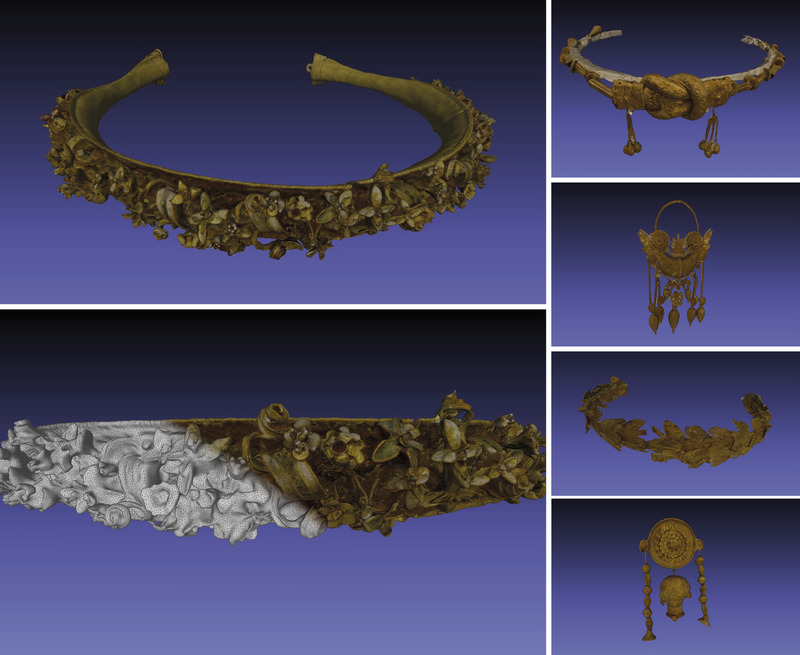 Academic ArticleDigital twins of archaeological finds: open source technologies applied to 3D scanningThis article aims to analyze the complex issue of 3D documentation of archaeological artifacts under different viewpoints: from potential technologies to current methodological limitations, in light of the obtained results. These results will be described based on direct experiences derived from specific archaeological projects, whose primary aim was indeed the creation of digital replicas of selected artifacts. Among the institutions involved in such projects are the MArTA (Museo Archeologico Nazionale di Taranto), the South Tyrol Museum of Archaeology, and the UMST (Unit. di Missione Strategica) of the Soprintendenza per i Beni e le Attività Culturali of the Autonomous Province of Trento (PAT).
 -
conference paper
-
Academic ArticleDigital tools for data acquisition and heritage management in archaeology and their impact on archaeological practicesThe significance of data acquisition in archaeological practice has consistently held great importance. Over the past few decades, the growing prevalence of digitization in acquiring data has significantly transformed the landscape of archaeological fieldwork, influencing both methodology and interpretation. The integration of digital photogrammetry and laser scanning technologies in archaeology has transformed data acquisition, enabling efficient and precise documentation. However, this digital shift raises concerns about information overload, the potential loss of on-site insights, and the need for suitable data management methods. Over the past 15 years, digital tools like photogrammetry, laser scanning, and unmanned aerial vehicles have advanced cultural heritage documentation. These methods offer detailed 3D models of archaeological sites, artifacts, and monuments, with evolving accessibility and user friendliness. This paper delves into methods for documenting cultural heritage, examining the implications of various approaches on the archaeologist’s workflow and on the field as a whole.
-
WebpageDigital technologies for citizen curation in museums: two case studies from the SPICE projectThe SPICE project started in 2020 during the Covid-19 pandemic with the aim to build social cohesion in museums by developing tools and methods...
-
Academic ArticleDigital Technologies and the Role of Data in Cultural Heritage: The Past, the Present, and the FutureIs culture considered to be our past, our roots, ancient ruins, or an old piece of art? Culture is all the factors that define who we are, how we act and interact in our world, in our daily activities, in our personal and public relations, in our life. Culture is all the things we are not obliged to do. However, today, we live in a mixed environment, an environment that is a combination of “offline” and the online, digital world. In this mixed environment, it is technology that defines our behaviour, technology that unites people in a large world, that finally, defines a status of “monoculture”. In this article, we examine the role of technology, and especially big data, in relation to the culture. We present the advances that led to paradigm shifts in the research area of cultural informatics, and forecast the future of culture as will be defined in this mixed world.
-
Academic ArticleDigital technologies and the archaeological topography of Castellito (Sicily): the reconstruction of a Roman villaThis paper presents the results of the research undertaken through a series of on-site surveys and studies (2019-2022) of the site of Castellito di Ramacca (Catania, Sicily). The site, located on the top of a low hill (106 msl), was partly excavated in the late 20th century and interpreted as a Roman rural building, possibly with a special function (road station). Its name is also attested in ancient sources (Capitoniana). The site was re-evaluated using various non-destructive prospecting methods (aerial photogrammetry, fieldwalking survey, architectural recording), precise location with RTK GNSS and integration of the legacy data in GIS. This approach confirmed a new addition to the already known villa complex and contextualized it as a focal point of the rural settlement system. Based on the topographical data obtained from the survey campaign, conducted by integrating of different techniques, we propose a reconstruction of the villa’s elevation at its peak in Late Antiquity. This study illustrates the great potential of applying digital technologies for a new understanding of Roman villa remains.
-
Academic ArticleDigital Technologies and Communication: Prospects and ExpectationsThe birth of virtual reality marked a new path forward and also gave a fresh view of reality, allowing alternative ‘readings’ of cultural heritage. This new way of representation and simulation was soon associated with the term virtual environment, used to indicate those interactive three-dimensional models that could be navigated and that simulated a place, building, or synthetic representation scheme in real time. A virtual environment is like a “microscope for the mind” that allows you to elaborate amplified projections of the material world, to “look beyond” simple appearances and to make logical connections between elements grouped together. In recent years, virtual environments have been greeted positively by the public and scholars, testified by the quantity of thematic conferences on the subject of Virtual Archaeology. Despite this, there are still many contradictions found in the varying terms and the diverse aims of the developing disciplines that gravitate around the field of virtual reality such as Cultural Virtual Environment, Virtual Restoration, Virtual Archaeology, Enhanced Reality, and Mixed Reality. The spread of new media has upset the traditional systems of communication such as books, television, radio and even the roles of some cultural stakeholder. With this in mind, the role of virtual heritage also consists in transmitting information using the language and cognitive metaphors used in video-games, considering these as cultural paradigms for a form of communication that is freed from the classic rules of elite culture. It is quite frequent to find projects of digital promotion for monuments that are characterised by difficulty of access, or for objects that have been taken from their original context. One solution to enhance the accessibility of those sites is certainly the use of some visual computing technologies which without presuming to be the ultimate answer to the problems posed, try to offer communications tools that permit an effective support to the visit.
-
BookDigital Survey and Documentation of the Archaeological and Architectural sites UNESCO World Heritage ListDigital Survey and Documentation of the Archaeological and Architectural sites UNESCO World Heritage List
-
 Academic ArticleDigital strategies for enhancing cultural heritage: the Villa del Casale of Piazza Armerina Project, from legacy data to digital ecosystemThe paper highlights the crucial role of legacy data in reconstructing archaeological sites and historical landscapes, emphasizing the need for digitization to safeguard and democratize access to heritage. Focused strategies for digital acquisition are essential, particularly in regions like Sicily with diverse cultural heritage facing challenges of preservation in the digital age. The project ‘Digital strategies for enhancing cultural heritage: the Villa del Casale of Piazza Armerina, from the late antique building site to the Museum Collection’ exemplifies this approach. Its foundation, aiming to bridge the gap between the Palazzo Trigona Museum and Villa del Casale through a web-based digital ecosystem, is firstly presented here. By adopting a multidisciplinary methodology, the project aims to gather scattered legacy data, advance scientific understanding, and develops precise datasets through historical research and digitization. The resulting digital ecosystem will feature immersive experiences and educational opportunities, enhancing accessibility and interoperability of digital contents. By integrating 3D artifact galleries with virtual models and legacy data, the project seeks to reveal the full potential of Villa del Casale cultural heritage, promoting appreciation and understanding for future generations.
 -
BookDigital Storytelling: A creator's guide to interactive entertainmentDigital Storytelling shows you how to create immersive, interactive narratives across a multitude of platforms, devices, and media. From age-old storytelling techniques to cutting-edge development processes, this book covers creating stories for all forms of New Media, including transmedia storytelling, video games, mobile apps, and second screen experiences. The way a story is told, a message is delivered, or a narrative is navigated has changed dramatically over the last few years. Stories are told through video games, interactive books, and social media. Stories are told on all sorts of different platforms and through all sorts of different devices. They’re immersive, letting the user interact with the story and letting the user enter the story and shape it themselves.This book features case studies that cover a great spectrum of platforms and different story genres. It also shows you how to plan processes for developing interactive narratives for all forms of entertainment and non-fiction purposes: education, training, information and promotion. Digital Storytelling features interviews with some of the industry’s biggest names, showing you how they build and tell their stories.
-
Academic ArticleDigital spaces: Pompeii, the Internet, and beyondThe emphasis of archaeological communication is no longer simply text on paper, but has moved on to encompass the expression of space and visibility. This paper discusses these new phenomena from the perspective of two recent projects, both of which presented spatial research material for dissemination on the World Wide Web. The first created a QuickTime virtual reality of Pompeii, Regio VI, and the second used an Internet based game engine to create a real-time virtual reconstruction of a Pompeian house. The paper also examines issues central to the integration of academia with the Internet and computing technology such as the advantages and disadvantages of using proprietary software and the opportunities and responsibilities presented by communication in the global community.
-
Academic ArticleDigital Rocks. An integrated approach to rock art recording: the case study of Ossimo-Pat (Valle Camonica), monolith 23This paper addresses the different methods of recording prehistoric rock art, with specific focus on the northern Italian area (Valle Camonica, UNESCO Site n. 94), and presents a new integrated way of recording and tracing engravings. This method combines different sources of data, both traditional, as an ‘enhanced’ way of rubbing, and technological. The active use of Structure from Motion photogrammetry and the subsequent mesh manipulation, as well as the implementation of digital macrophotography with artificial oblique lighting, are among the methods used for the recognition of the correct features of the carvings, while the tracing of the engraved figures, executed in vector graphics, is structured on layers. Combining the benefits of the digitally enhanced visibility of the figures with the precision and versatility of digital vector drawing, this method produces state of the art tracings of rock art, for a better comprehension of the symbols carved on the stone. All steps of this method are demonstrated using, as a selected case study, the unpublished monolith n. 23 from the Copper Age Sanctuary of Ossimo, Pat (BS) in Valle Camonica, Northern Italy.
-
Academic ArticleDigital rescue of an archaeological site at risk: the prehistoric village of Portella (Sicily)The prehistoric village of Portella (Salina, Eolian Islands, ME), occupied during the Middle Bronze period, was discovered by chance in the 1950s and excavated in three different phases, from the moment of discovery until 2008. The site is well preserved because, after partial destruction, it was rapidly covered by landslides of volcanic rock. That notwithstanding, the erosive activity had negative effects, too: the lateral erosion of the ridge is destroying part of the village; possibly a portion was already collapsed at the time of discovery. We can consider this erosion an unstoppable process that needs programmatic, continuous monitoring of the site. In the article, we will discuss how it is possible to make one ‘screenshot’ of the monument’s status with the help of new technologies, specifically, photogrammetry through UAVs. To enhance fruition, a virtual tour of the site was also created. This allows people with physical disabilities or reduced mobility to access, though virtually, the site. In conclusion, other possible areas of application of this low-cost and expeditious methodology are suggested, in particular inaccessible or overcrowded sites.
-
Academic ArticleDigital replica of cultural landscapes: An experimental reality-based workflow to create realistic, interactive open world experiencesIn the last decades, the awareness of what cultural heritage is, as well as its definition, has changed and broaden its horizon. Important international institutions such as ICOMOS and UNESCO, which represent the reference points for documentation and protection, have revised the definition of cultural heritage to include not only the elements of historical-artistic relevance and the testimonies of a civilization but also the environment around them. In other words, the meaning of cultural heritage has been extended to the concept of cultural landscape. This article tries to meet this last definition of cultural heritage: through an extensive 3D survey of the ancient city of Sarmizegetusa (National Historical Monument), it presents a new perspective for the documentation and representation of cultural landscape that includes not only the structures of the city but also the areas that have not been excavated yet, and the surrounding natural environment. The term “digital replica” is presented to define this new perspective. The article deals in detail with the whole digitization process and the tools used to obtain a digital replica of a Roman city deepening the integration between photogrammetry and computer graphics. The detailed description is intended to make the workflow reproducible by the scientific community. Besides, as a final remark, experimented optimization procedures and navigation tools designed to manage and explore large three-dimensional datasets will be illustrated.
-
BookDigital Methods and Remote Sensing in Archaeology: Archaeology in the Age of SensingThis volume debuts the new scope of Remote Sensing, which was first defined as the analysis of data collected by sensors that were not in physical contact with the objects under investigation (using cameras, scanners, and radar systems operating from spaceborne or airborne platforms). A wider characterization is now possible: Remote Sensing can be any non-destructive approach to viewing the buried and nominally invisible evidence of past activity. Spaceborne and airborne sensors, now supplemented by laser scanning, are united using ground-based geophysical instruments and undersea remote sensing, as well as other non-invasive techniques such as surface collection or field-walking survey. Now, any method that enables observation of evidence on or beneath the surface of the earth, without impact on the surviving stratigraphy, is legitimately within the realm of Remote Sensing.
-
Academic ArticleDigital invasions: from point clouds to historical building object modeling (h-bom) of a unesco whl siteThe paper here presented shows the outcomes of a research/didactic activity carried out within a workshop titled "Digital Invasions. From point cloud to Heritage Building Information Modeling" held at Politecnico di Torino (29th September–5th October 2016). The term digital invasions refers to an Italian bottom up project born in the 2013 with the aim of promoting innovative digital ways for the enhancement of Cultural Heritage by the co-creation of cultural contents and its sharing through social media platforms. At this regard, we have worked with students of Architectural Master of Science degree, training them with a multidisciplinary teaching team (Architectural Representation, History of Architecture, Restoration, Digital Communication and Geomatics). The aim was also to test if our students could be involved in a sort of niche crowdsourcing for the creation of a library of H-BOMS (Historical-Building Object Modeling) of architectural elements.
-
BookDigital Innovations in European ArchaeologyEuropean archaeologists in the last two decades have worked to integrate a wide range of emerging digital tools to enhance the recording, analysis, and dissemination of archaeological data. These techniques have expanded and altered the data collected by archaeologists as well as their interpretations. At the same time archaeologists have expanded the capabilities of using these data on a large scale, across platforms, regions, and time periods, utilising new and existing digital research infrastructures to enhance the scale of data used for archaeological interpretations. This Element discusses some of the most recent, innovative uses of these techniques in European archaeology at different stages of archaeological work. In addition to providing an overview of some of these techniques, it critically assesses these approaches and outlines the recent challenges to the discipline posed by self-reflexive use of these tools and advocacy for their open use in cultural heritage preservation and public engagement.
-
Academic Article
-
Academic ArticleDigital imaging of standing buildings in Insula VI,1 at PompeiiThe large-scale recording and investigation of standing archaeological monuments by conventional methods presents considerable problems of labour and expense. Modern techniques provide cost-effective methods applied in Pompeii, using widely available technology in digital imaging, computer hardware and software. These approaches provide important benefits both for research and for conservation policies. They facilitate the analysis of the structural history of the buildings, which forms a crucial part of the research programme of the Anglo-American Pompeii Project. However their advantages for the speedy documentation of the current condition of extensive areas of standing monuments are of more general application.
-
Academic ArticleDigital image enhancement for recording rupestrian engravings: applications to an alpine rockshelterImage processing software, such as the DStretch plug-in for ImageJ or Photoshop, are currently used to make faint rupestrian pictographs more legible. During the ongoing study of an Alpine rockshelter, these software proved to be equally useful for the visualization of linear engravings and scratchings. This unexpected function of DStretch, created for the study of rupestrian paintings, made it possible to clarify and correct the previous recordings of an incised Iron Age warrior and to facilitate the digital tracing of a modern maritime scene. Even if such convincing results are determined by particular local geological conditions in this case, this function could facilitate the study of engravings in other contexts where the lithology of smooth rock surfaces produces a sharp contrast with incised images.
-
conference paperDigital Humanities and Heritage Science: moving from landscaping to a dynamic research observatory in an Open Science CloudThe contribution presents work, carried out in the second work package of the Humanities and Heritage Italian Science Cloud (H2IOSC) infrastructural project dedicated to ‘Landscaping and Building Communities’, on the definition of a methodology for landscaping the actual status of resource and technology availability and exploitation in the Humanities and Cultural Heritage. The activity involves a comprehensive investigation encompassing language technologies, digital humanities, and heritage science disciplines in Italy. The aim of the landscaping is to collect information on the latest and most prevalent resources, tools, communities, best practices, standards, and projects developed within the Heritage, Social Sciences, and Digital Humanities communities. In this work package, the four partnering infrastructures - CLARIN, DARIAH, E-RIHS, and OPERAS - collaborate closely to develop the best strategies for engaging and meeting the needs of their target research communities as well as to identify the set of priority items (resources, tools, and services) to FAIRify and onboard into the national Marketplace.
-
Academic ArticleDigital Heritage consumption: The case of the Metropolitan Museum of ArtCultural consumption is increasingly moving into a digital realm where art and non-art spaces blur in an all-inclusive image-rich environment online. While cultural consumption studies remain limited to a defined cultural environment (e.g. the museum website), we will analyse the patterns of consumption of 119 paintings from the Metropoli- tan Museum of Art collection in an all-inclusive online environment, Wikipedia. We will find paintings in art as well as non-art related articles and compare visibility to the institutional physical and online exhibition, a purely art environment. We will find a greater share of digital cultural consumption takes place in non-art related articles, inferring accidental consumption, while fact-checking and the presence of articles about obscure paintings satisfy a utilitarian information use. We will argue that digital cultural consumption can expand the user base when positioned outside of the expected art context, enabling new forms of hedonic and utilitarian consumption. Our results suggest that the adoption of the online encyclopaedia by superstar museums reflects a new conceptualisation of authen- tic taste that includes digital consumption, highlighting the collection’s information value.
-
Academic ArticleDigital Geography and ClassicsThe authors open by imagining one possible use of digital geographic techniques in the context of humanities research in 2017. They then outline the background to this vision, from early engagements in web-based mapping for the Classics to recent, fast-paced developments in web-based, collaborative geography. The article concludes with a description of their own Pleiades Project (http://pleiades.stoa.org), which gives scholars, students and enthusiasts worldwide the opportunity to use, create and share historical geographic information about the Greek and Roman World in digital form.
-
reportDigital Epigraphy in 2022: A Report from the Scoping Survey of the FAIR Epigraphy ProjectThis document maps the state of digital epigraphy in early 2022, with a focus on Open Science practices and accessibility of resources. The report is based on anonymised responses received during the digital survey circulating between February and April 2022, organised by the FAIR Epigraphy Project. The responses cover a broad spectrum of projects from Europe and the USA, ranging from well-established projects with relatively stable institutional support to short-term projects with a more narrow focus and limited access to IT support and funding. The results of the survey will be used to inform the planning of the FAIR Epigraphy project in the following three years. The report is fully reproducible (written in R programming language) and along with the anonymised data accessible via its own GitHub repository (https://github.com/FAIR-epigraphy/scoping_survey_report), and published through Zenodo. You can access the report either as an interactive HTML version or download the report as PDF. This work was supported by the Arts and Humanities Research Council (AHRC) [grant number AH/W010682/1]; and the Deutsche Forschungsgemeinschaft (DFG) [grant number 468455971].
-
Academic ArticleDigital data and the conservation of the historic built environmentThis paper illustrates the importance of digital records for the conservation of historic buildings and sites. The various survey techniques appropriate for the production of graphic documentation are explained, with an outline of the advantages of processing within a CAD environment. It introduces the debate on the scope and level of recording, and identifies problems and opportunities requiring further research. Finally, the paper stresses the need for integrated project management, and the development of recording strategies in conjunction with all other professional bodies involved in the conservation process.
-
TextDigital Curation of Photogrammetric DataThis is an abstract from the "Towards a Standardization of Photogrammetric Methods in Archaeology: A Conversation about 'Best Practices' in An Emerging Methodology" session, at the 84th annual meeting of the Society for American Archaeology. Back in 2003, archaeologists were warned of what Sullivan and Childs (2003) coined as the “Curation Crisis.” They explained that a set of historical circumstances, “contributed to a crisis in curation of archaeological collections.” Primarily focused on the curation of physical documents and objects, they argued that long-term curation efforts need to be emphasized in all stages of archaeological research. A similar alarm was raised in 2015, when Mary Clarke (2015) wrote on the issue of digital data curation in what she called the “Digital Dilemma.” This call to action still rings true in the present where we see an ever-increasing proliferation of digital data stemming from archaeological contexts and projects. While this deluge of information is gladly accepted in advancing the field, the level of curation and preservation is still deficient. Focusing on photogrammetric practices, in this paper I will offer standardization methods that are useful in all stages of the archaeological process to ensure proper curation.
-
BookDigital Classics Outside the Echo-Chamber: Teaching, Knowledge Exchange & Public EngagementEdited by organisers of "Digital Classicist" seminars in London and Berlin, this volume explores the impact of computational approaches to the study of antiquity on audiences other than the scholars who conventionally publish it. In addition to colleagues in classics and digital humanities, the eleven chapters herein concern and are addressed to students, heritage professionals and "citizen scientists". Each chapter is a scholarly contribution, presenting research questions in the classics, digital humanities or, in many cases, both. They are all also examples of work within one of the most important areas of academia today: scholarly research and outputs that engage with collaborators and audiences not only including our colleagues, but also students, academics in different fields including the hard sciences, professionals and the broader public. Collaboration and scholarly interaction, particularly with better-funded and more technically advanced disciplines, is essential to digital humanities and perhaps even more so to digital classics. The international perspectives on these issues are especially valuable in an increasingly connected, institutionally and administratively diverse world. This book addresses the broad range of issues scholars and practitioners face in engaging with students, professionals and the public, in accessible and valuable chapters from authors of many backgrounds and areas of expertise, including language and linguistics, history, archaeology and architecture. This collection will be of interest to teachers, scientists, cultural heritage professionals, linguists and enthusiasts of history and antiquity.
-
Academic ArticleDigital chronological data reuse in archaeology: Three case studies with varying purposes and perspectivesA wealth of digital data are produced during an archaeological excavation and because so much of the fieldwork is unrepeatable, once the site is fully excavated, the digital records must be archived in a manner that best facilitates reuse. This paper presents three case studies of users wishing to reuse digital archaeological data from online repositories, with a specific focus on absolute and relative dating evidence. We discuss the problems encountered and how they reflect the wider issues of the reuse of digital archaeological data. Additionally, we provide recommendations specific to chronological data that seek to address the problems.
-
Academic ArticleDigital camera calibration methods: Considerations and comparisonsCamera calibration has always been an essential component of photogrammetric measurement, with self-calibration nowadays being an integral and routinely applied operation within photogrammetric triangulation, especially in high-accuracy close-range measurement. With the very rapid growth in adoption of off-the-shelf digital cameras for a host of new 3D measurement applications, however, there are many situations where the geometry of the image network will not support robust recovery of camera parameters via on-the-job calibration. For this reason, stand-alone camera calibration has again emerged as an important issue in close-range photogrammetry, and it also remains a topic of research interest in computer vision. This paper overviews the current approaches adopted for camera calibration in close-range photogrammetry and computer vision, and discusses operational aspects for self-calibration. Also, the results of camera calibrations using different algorithms are summarized. Finally, the impact of chromatic aberration on modelled radial distortion is touched upon to highlight the fact that there are still issues of research interest in the photogrammetric calibration of consumer-grade digital cameras.
-
Academic ArticleDigital Archiving in Archaeology: The State of the Art. IntroductionThe articles in this issue demonstrate significant differences in digital archiving capacity in different countries, reflecting differences in the history of archaeology in each country as well as attitudes to archaeology across the world.
-
Academic ArticleDigital Archaeology: From Interdisciplinarity to the ‘Fusion’ of Core Competences Towards the Consolidation of New Research AreasThe aim of this article is to explore the interdisciplinary turn observed in the development of humanities computing, in terms of integration and fusion of expertise. The debate started with the Seminar on Discipline umanistiche e informatica. Il problema dell’integrazione , held in 1991 at the Accademia Nazionale dei Lincei. Moving backwards in time, already from the 1960s the role of ‘integration’ was at the heart of many interdisciplinary initiatives supported by the National Research Council of Italy and the Accademia Nazionale dei Lincei as part of their coordinated efforts to promote scientific progress. Through a number of archaeological case studies pivoting around the Etruscan civilisation, it will be shown how over time archaeological computing, and its evolution towards digital archaeology, has found in GIS and multimedia systems a unitary platform on which methods and practice of data acquisition, analysis, interpretation, and communication can converge. The concept of ‘fusion’, however, is much more recent and responds to a global resource management model, which combines the methods of archaeology with the objectives of Heritage Science, along the research path that goes from field and laboratory investigation to the protection, enhancement and communication of cultural heritage.
-
Book SectionDigital archaeology: A historical contextThe use of computers in archaeology is entering a new phase of unparalleled development, moving on from a specialist methodology on the margins to a powerful practical and analytical tool used across all areas of archaeological interest. With a thorough examination of the ways in which both everyday and cutting-edge technologies can be used to inform and enhance traditional methods, this book brings together ideology from the academic world and pragmatic, concrete examples to show how fieldwork, theory and technology fit together today as never before.Covering a history of the rise of computer use in archaeology as well as a thorough assessment of a number of high profile examples such as the Ferrybridge Chariot, this book shows how new technologies have been implemented into both theory and method as an integral part of the archaeological process.With contributions from renowned experts, experienced professionals and emerging names in the field, this unique, forward-thinking book brings together previously disparate aspects of archaeology in a new holistic approach to the study of the past. A companion website is also available to allow further study of the images included.
-
Book Section
-
Book SectionDigital Archaeologies: debugging three personal experimentsIn this chapter, I present three Digital Archaeology experiments conducted by me during the last 15 years. First, is an experiment about the construction and use of 3D models of archaeological sites to bring the real and the virtual to a dialogue
-
conference paper
-
Academic Article
-
Academic ArticleDigital acquisition: reflections on data qualityIn the past twenty years archaeological survey has changed radically thanks to the progress in the field of technology, in particular concerning 3D massive acquisition methods. A variety of data acquisition modes, based on active and passive sensor systems, is increasingly easier to access and use to document cultural heritage. The scientific debate focuses primarily on two issues: the use of free or proprietary software, and the control over data quality, in terms of metric accuracy, by comparing 3D image-based acquisition methods with consolidated methods (laser scansion and/or topographic survey). Collecting, interpreting and filing a large amount of information helps to define a system we can use to understand our archaeological heritage. The system is based on the scientific process used to achieve a dual objective: first, to document acquisition using a heterogeneous set of data (x, y, z and RGB) and metadata (information processing) and guarantee repeatability; secondly, to ensure data quality during acquisition and processing. Data processing obtained using 3D massive acquisition methods makes it possible to build models characterized by a biunivocal correspondence to the real object, studied from a geometric and spatial point of view. The study focuses on the shift from quantitative data, acquired in a semi-automatic manner, to qualitative data, meticulously controlled as regards to uncertainty. In this framework, all branches of the Science of Representation ensure metric, spatial and formal control of the built models. The study of the 13th century Gates of the city of Bologna have so far led to the development of a scientific process providing important data about metric quality vis-à-vis, the scale of the model.
-
Academic ArticleDigital 3D Technologies for Humanities Research and Education: An OverviewDigital 3D modelling and visualization technologies have been widely applied to support research in the humanities since the 1980s. Since technological backgrounds, project opportunities, and methodological considerations for application are widely discussed in the literature, one of the next tasks is to validate these techniques within a wider scientific community and establish them in the culture of academic disciplines. This article resulted from a postdoctoral thesis and is intended to provide a comprehensive overview on the use of digital 3D technologies in the humanities with regards to (1) scenarios, user communities, and epistemic challenges; (2) technologies, UX design, and workflows; and (3) framework conditions as legislation, infrastructures, and teaching programs. Although the results are of relevance for 3D modelling in all humanities disciplines, the focus of our studies is on modelling of past architectural and cultural landscape objects via interpretative 3D reconstruction methods.
-
Academic ArticleDigital 3D modeling using photogrammetry and 3D printing applied to the restoration of a Hispano-Roman architectural ornamentNew technologies provide the means to record images of cultural assets and, subsequently, process them to obtain virtual or physical items, guaranteeing greater respect for their physical integrity. The main purpose of this paper is to demonstrate a useful workflow concerning photogrammetric techniques, specific software and 3D printing for the application of non-invasive restoration treatments. The applied methodology was based on the application of photogrammetric digital 3D modeling to obtain virtual models of a Roman cornice from Castulo Archaeological Site (located in Spain), along with the subsequent use of those models for the material restoration of the losses, by making the 3D printing of the piece for the reintegration. The results demonstrate that the losses can be accurately and controllably filled in by direct reintegration, potentially in several 3D printing materials, and by using a mold, which could also be printed. The automatic creation of the mold using specific software could considerably reduce the manufacture process.
-
Academic ArticleDigging Wikipedia: The Online Encyclopedia as a Digital Cultural Heritage Gateway and SiteThe online encyclopedia Wikipedia is both a cultural reference to store, refer to, and organize digitized and digital information, as well as a key contemporary digital heritage endeavor in itself. Capitalizing on this dual nature of the project, this article introduces Wikipedia as a digital gateway to and site of an active engagement with cultural heritage. We have developed the open source and freely available analysis architecture Contropedia to examine already existing volunteer user-generated participation around cultural heritage and to promote further engagement with it. Conceptually, we employ the notion of memory work, as it helps to treat Wikipedia's articles, edit histories, and discussion pages as a rich resource to study how cultural heritage is received and (re)worked in and across languages and cultures. Contropedia's architecture allows for the study of the negotiations around and appreciation of cultural heritage without assuming an unchallenged and universal understanding of cultural heritage. The analysis facilitated by Contropedia thus sheds light on the contentious articulation of perspectives on tangible and intangible heritage grounded by conflicting conceptions of events, ideas, places, or persons. Technologically, Contropedia combines techniques based on mining article edit histories and analyzing discussion patterns in talk pages to identify and visualize heritage-related disputes within an article, and to compare these across language versions. In terms of digital heritage, Contropedia presents a powerful tool that opens up a core resource to cultural heritage studies. Moreover, it can form part of a conceptually grounded, technically advanced, and practically enrolled infrastructure for public education that opens up the dynamic formation of both knowledge about cultural heritage and new forms of digital cultural heritage that show a considerable amount of friction.
-
BookDigging Up Excavations. Processi di ricontestualizzazione di ‘vecchi’ scavi. Esperienze, problemi, prospettive, Atti del Seminario (Pavia, 15-16 gennaio 2015)La rilettura critica di dati di scavo rimasti inediti, condotte in archivio su documenti, nei depositi museali, nonchè la rapertutìra materiale di trincee parzialmìente esplorate - tema centrale del seminario del Collegio Ghislieri, di cui questo volume raccoglie gli atti - esigono da chi li intraprenda requisiti non comuni di pazienza, acribia, abnegazione personale, e presuppongono quell'appassionato spirito di sacrificio che è comune a tutti coloro che praticano il mestiere dell'archeologo. Sono indagini finalizzate al recupero di dati altrimenti nascosti che trovano il loro premio nella ricontestualizzazione di reperti che potevano sembrare irreparabilmente adespoti, e rendono onore alle fatiche compiute in passato da autentici professionisti e talentuosi amatori. Vengono qui esposti risultati di ricerche sulle tracce di personaggi di indiscutibile grandezza nell'archeologia italiana tra l'Ottocento e la prima metà del Novecento, e si espongono risultati di scavi condotti nella seconda metà del Novecento.
-
Person
-
Person
-
Book Section