Dedicato ad Augusto, scritto tra il 27 e il 23 a.C., e diviso in dieci libri, il De Architectura è al tempo stesso un libro di bottega, un riferimento teorico ideale, un canone incontrastato del classicismo architettonico, che fonde nella sua trattazione elementi tratti dalle discipline più svariate: aritmetica, geometria, disegno, musica, astronomia, ottica, medicina, giurisprudenza, filosofia. In questa edizione la traduzione italiana è accompagnata dal testo latino a fronte, dalle note e da un commento archeologico e architettonico.
Geographic information system (GIS)-based predictive modelling is widely used in archaeology to identify suitable zones for ancient settlement locations and determine underlying factors of their distribution. In this study, we developed predictive models on Roman viticulture in the Laetanian Region (Hispania Citerior-Tarraconensis), using the location of 82 ancient wine-pressing facilities or torcularia as response variables and 15 topographical and 6 socio-economic cost distance datasets as predictor variables. Several predictor variable subsets were selected either by expert knowledge of similar studies or by using a semi-automatization algorithm based on statistical distribution metrics of the input data. The latter aims at simplifying modelling and minimizing the necessity of a priori knowledge. Both approaches predicted the distribution of archeological sites sufficiently well. However, the best prediction performance was obtained by an expert knowledge model utilizing a predictor variable combination based on recommendations on viticulture by Lucius Junius Moderatus Columella, the prominent ancient Roman agronomist. The results indicate that the accessibility of a location and its connectivity to trade routes and distribution centres, determined by terrain steepness, was decisive for the settlement of viticultural facilities. With the knowledge gained, the ancient cultivated area and number of wine-pressing facilities needed for processing the vineyard yields were extrapolated for the entire study region.
This project has studied metallic ingots from the Etruria Padana that come from either old excavations and more recent ones. The samples have been studied through chemical-physical structural and metallographic analysis; the process, conducted after years of restoration, leaves no trace on the object, as it concerns only a few milligrams of sample, which usually allows the identification of about 15 elements in the alloy. The sample is taken after accurate weighing and a series of chemical treatments, through its exposure to a strumental analysis through Atomic Absorption Spectrometry. With this type of analysis a qualitative and quantitative measurement of the elements of the alloy is made. The results of the analysis are transferred to tables in Excel; then, through these tables, a series of graphics are produced giving a better opportunity to evaluate the concentration of the most important elements of the alloy. The computer allows us also to organize, in the same table, the study of one or more elements in comparison with the others, in order to give different meanings to the results obtained, by for example, producing a decreasing movement in the concentration of an element; so we obtain some graphics that may better point out the differences. The use of computer graphics permits not only an easy reading of the elements of the alloy, but also better evidence of the differences regarding the composition that are particular to some different classes of metal objects.
We present a new technique called “t-SNE” that visualizes high-dimensional data by giving each datapoint a location in a two or three-dimensional map. The technique is a variation of Stochastic Neighbor Embedding (Hinton and Roweis, 2002) that is much easier to optimize, and produces significantly better visualizations by reducing the tendency to crowd points together in the center of the map. t-SNE is better than existing techniques at creating a single map that reveals structure at many different scales. This is particularly important for high-dimensional data that lie on several different, but related, low-dimensional manifolds, such as images of objects from multiple classes seen from multiple viewpoints. For visualizing the structure of very large data sets, we show how t-SNE can use random walks on neighborhood graphs to allow the implicit structure of all of the data to influence the way in which a subset of the data is displayed. We illustrate the performance of t-SNE on a wide variety of data sets and compare it with many other non-parametric visualization techniques, including Sammon mapping, Isomap, and Locally Linear Embedding. The visualizations produced by t-SNE are significantly better than those produced by the other techniques on almost all of the data sets
A review of the archeological and non-archeological use of visibility networks reveals the use of a limited range of formal techniques, in particular for representing visibility theories. This paper aims to contribute to the study of complex visual relational phenomena in landscape archeology by proposing a range of visibility network patterns and methods. We propose first- and second-order visibility graph representations of total and cumulative viewsheds, and two-mode representations of cumulative viewsheds. We present network patterns that can be used to represent aspects of visibility theories and that can be used in statistical simulation models to compare theorized networks with observed networks. We argue for the need to incorporate observed visibility network density in these simulation models, by illustrating strong differences in visibility network density in three example landscapes. The approach is illustrated through a brief case study of visibility networks of long barrows in Cranborne Chase.</p>
This paper uses GIS and visibility analysis to examine if Rubers Law fits into the known Roman communication and infrastructure network of towers, forts, camps and roadways in southern Scotland. Rubers Law is a prominent hill in the Scottish Borders with an extensive archaeological history, and the discovery of approximately 30 Roman building stones on the summit in the early 20th century led to the conclusion that it had been the site of a Roman signal station, despite a lack of concrete evidence for a Roman occupation. Visibility and intervisibility from the Roman towers was analysed using four types of viewshed analysis: regular, cumulative, fuzzy, and probable. The results were analysed to determine what would be visible from Rubers Law from a tower between 7m and 10m high. The various viewshed methods were also compared; it was determined that regular and cumulative viewsheds over predict visibility, while fuzzy and probable methods are more robust. Based on this analysis, a tower on Rubers Law could have been a major relay station, passing messages from Brownhart Law and Craik Cross Hill to Eildon Hill North and Newstead Roman Fort.
This paper aims to present the possible use of computer simulations in archeology by building and testing virtual models and the proposed development of autonomous systems of knowledge.. in this way, i present the Lavras do abade case study where an electronic model of the site was used to analyze and interpret built space.
Thorough and organized documentation is crucial for conservation of historic structures. While photogrammetry, laser scanning and building information modeling (BIM) have enhanced 3D documentation in conservation, it is imperative that the method of documentation matches the requirements of the project. Present methods are efficient for certain types of projects. However, for projects that need to depict 3D conservation challenges, but do not have the budget or time for a 3D model, a middle ground does not exist. We present an intermediate solution, a workflow for virtual tour environments (VT) and informational modeling (IM) and we test this workflow on a case study. The VT/IM environment we created contains building plans, previous conservation reports, image galleries, databases about past interventions and short descriptions of the conservation issues at Princeton University. In this paper, we compare conservation reports using 2D plans against the VT/IM environment and we compare the time, cost and data management of VT/IM with methods of 3D documentation.
Archaeological textile remains from Antiquity are rare due to their perishable nature. In certain cases, the conservation of the morphology and/or of chemical signatures can be exquisite. Detailed archaeological information on the social and cultural life of past societies, such as on funerary practices, can then be deduced from their study. In temperate climates, these cases of exceptional preservation mainly involve textiles closely associated with corroded metal artefacts (i.e. copper or iron based), through a process called mineralisation. An essential step in understanding these textiles is the study of morphometric parameters documenting their manufacturing processes, which is carried out by archaeologists under the name of technical analysis. In this article, we show how the use of high-resolution synchrotron-based microtomography (μCT) can contribute to performing a non-invasive 3D technical analysis of archaeological textiles and overpass several limitations of the conventional techniques. We show that several standard parameters (e.g. weave type, type of yarn, direction of twist, thread count) characterising the manufacturing of these ancient textiles can be determined, while some of them are very difficult to obtain using optical and electronic microscopies. In addition, the statistical representativeness of the data can be examined. The comparison between the three approaches – manual measurements either from surface microscopy or from selected virtual sections and automated analysis on 3D volumes – leads to question the differences between the quantitative results obtained. While the manual selection of measurement points is inherently associated to perceptual biases, the automated process may also come with limitations and biases which we detail in order to make the method more robust for future use. We analyse these implications by studying a textile from the locality of Le Paradis in Creney-près-Troyes (Aube, France, 5th century BC), taken as a typical case of fragmentary textile difficult to analyse by standard analytical methods.
In the field of Cultural Heritage, the technological advances of recent years have enriched and optimised the possibility of documenting and studying ancient graffiti with a wide range of low-cost and non-invasive methodologies. The most popular are digital photogrammetry SfM (Structure from Motion) and RTI (Reflectance Transformation Imaging) methodologies. The RTI is a powerful tool that, through the use of open source software, enables the documentation of data that are difficult to visualise, facilitating the recognition of traces and marks on the surface of objects. On the other hand, the SfM 3D models are increasingly replacing documentation with traditional photographs. This ‘almost excessive’ production of three-dimensional models is not often accompanied by an adequate exploitation of all their potential uses. This research aims to investigate the possibility of using a high-resolution 3D model for the implementation of virtual RTI processing, a hybrid method that combines 3D, virtual manipulation and 2D technologies in a fast and intuitive workflow suitable for the documentation of a wide range of archaeological monuments. The process sees the 3D model from the SfM survey being illuminated and photographed in a virtual dome in the open source Blender environment; therefore, the images generated are processed with RTI Builder software.
Today, the practice of making digital replicas of artworks and restoring and recontextualizing them within artificial simulations is widespread in the virtual heritage domain. Virtual reconstructions have achieved results of great realistic and aesthetic impact. Alongside the practice, a growing methodological awareness has developed of the extent to which, and how, it is permissible to virtually operate in the field of restoration, avoid a false sense of reality, and preserve the reliability of the original content. However, there is not yet a full sharing of meanings in virtual restoration and reconstruction domains. Therefore, this article aims to clarify and define concepts, functions, fields of application, and methodologies. The goal of virtual heritage is not only producing digital replicas. In the absence of materiality, what emerges as a fundamental value are the interaction processes, the semantic values that can be attributed to the model itself. The cognitive process originates from this interaction. The theoretical discussion is supported by exemplar case studies carried out by the authors over almost twenty years. Finally, the concepts of uniqueness and authenticity need to be again pondered in light of the digital era. Indeed, real and virtual should be considered as a continuum, as they exchange information favoring new processes of interaction and critical thinking.
Since the 1990s the application of the digital 3D reconstruction and computer-based visualisation of culturalheritage increased. The virtual reconstruction and 3D visualisation revealed a new “glittering” research space forobject-oriented disciplines such as archaeology, art history and architecture. Nevertheless the academicsconcerned with the uprising technology recognised early the lack of documentation standards in the 3Dprojects leading to the loss of information, findings and the fusion of knowledge behind the digital 3Drepresentation. Based on the methodological fundamentals of the digital 3D reconstruction the potentials andchallenges in the light of emerging Semantic Web and Web3D technologies will be introduced. The presentationsubscribes a scientific methodology and a collaborative web-based research environment followed by crucialfeatures for this kind of projects. As the groundwork a human- and machine-readable “language of objects” andthe implementation of this semantic patterns for spatial research purposes on destroyed and/or never realisedtangible cultural heritage will be discussed. Using examples from the practice the presentation explains therequirements of the Semantic Web (Linked Data), the role of controlled vocabularies, the architecture of the VREand the impact of a customised integration of interactive 3D models within the WebGL technology. Thepresentation intends to showcase the state-of-the-art on the way to a digital research infrastructure. The focuslies on the introduction of scholarly approved and sustainable digital 3D reconstruction, complaint withrecognised documentation standards and following the Linked Data requirements.
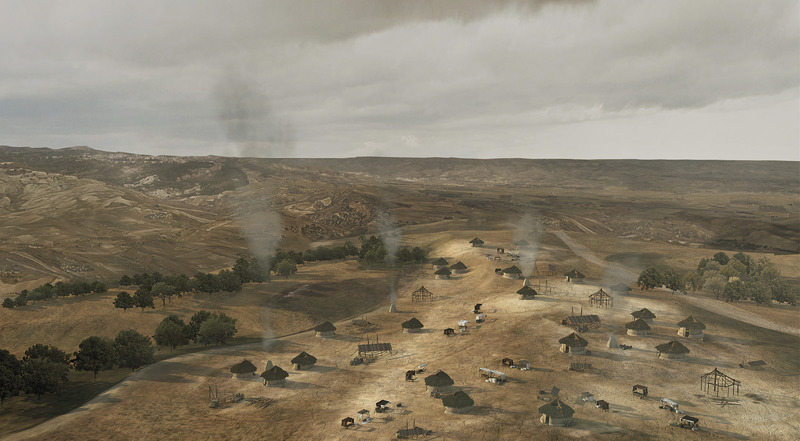
Virtual Archaeology is a developing scientific discipline that seeks to open windows into the past. Born from the ‘Seville Principles’, it is a powerful tool in the virtualisation of heritage, promoting a multidisciplinary approach and overcoming professional individualism. A case study is presented on the virtual recreation of the Roman city of Épora in Montoro (Córdoba, Spain) using historical-archaeological and literary data. Virtual reconstruction differs from virtual recreation in its focus on the physical representation of archaeological elements, while virtual recreation focuses on the visual recovery of the past of a specific archaeological site or context, which is not fully or partially confirmed. The study shows how Virtual Archaeology tools and protocols can be improved and highlights the need for specific forums to collectively discuss and improve the discipline.
Currently, the use of 3D digital acquisition techniques represents the most popular means for the documentation and digitization of archaeological heritage. The advantage of recreating a detailed virtual model of a site is twofold. On the one hand, it provides a support for archaeologists who deal with continuous work of restoration and their associated studies. In fact, the majority of the sites are made of perishable materials, making essential the adoption of fast tool for data acquisition. On the other hand, the different medium of visualization reaches the wider public directly, improving the spread of Cultural Heritage artefacts. The reality-based representation may not be sufficient by itself to convey all the information about a site. We therefore propose an integrated approach based upon a combination of different 3D acquisition techniques for virtual reconstruction of a complex archaeological building. In this paper, a methodology for a low cost acquisition, processing and visualization of data is presented. The aim of this work is to describe a complete workflow for virtual reconstruction, from the acquisition to the model visualization, by integrating spherical photogrammetry and dense reconstruction techniques. This allows one to obtain a model that is metrical and accurate at the same time. Details of the final virtual reconstruction demonstrate the validity of the pipeline. The methodology has been experimented on a typical building called Huaca Arco Iris, situated into the complex of Chan Chan site, an UNESCO archaeological area in Peru.
The focus of this paper is to highlight what are the major theoretical issues of virtual reconstruction in archeology (black-box effect, palimpsest-effect, role of accuracy) and explain how the Extended Matrix approach was designed to respond to these specific needs. The Extended Matrix (EM) is a tool that extends the stratigraphic approach to the recording and managing of the re-constructive record: one of the goals of this research is to prove that the stratigraphic method, intended as chronological reading of a spatial context, is able to compose a complete and multidimensional re-constructive record through the EM. This approach can improve the quality of virtual reconstructions non only for scientific purposes but also in the industry of Virtual Museums and Digital Libraries.
This paper concerns the development of an immersive VR application for the enhancement of an inaccessible old Castle in Corsano, a small village in Salento - Italy. Starting from the 3D reconstruction of the building, the project allowed the development of an interaction system aimed at providing the user with the historical information about the Castle. These contents come from the analysis of the tangible cultural heritage (such as the architectural elements, the furniture, the decorative motifs of the castle, and their evolution through the centuries), but also from the collection of intangible heritage, such as reminiscences on folk customs and traditions related to the context of the castle. Moreover, in order to evaluate the user experience of the developed application, some tests were carried out on a heterogeneous sample of users, obtaining positive feedback on the degree of immersiveness and sense of presence of the application.
In this paper, a general framework for using Virtual Reality techniques in the domain of Archaeological Visualisation is presented. It is argued that “visualising” is not the same as “seeing”, but is an inferential process to understand reality. A definition of Enhanced Reality is also presented, and how visual models can be used in order to obtain additional information about the dynamic nature of historical processes and archaeological data.
Current official definitions of “museum” in different countries are examined, together with their implications: the role of museums, their characteristics, the activities museums are expected to conduct. The presence of virtual museums on the Internet is also evaluated. As far as archaeology is concerned, the term “musealization” is analyzed, which denotes the operations necessary to transform a monument or a site into a tourist destination; therefore it brings in itself two opposite meanings of preservation, by means of organized actions and favoring the access and the economic exploitation of the heritage resources. The aspects of technology and virtuality available to museum and archaeological site curators are given in detail, describing dedicated international projects. The author concludes by analyzing the issue of the user’s perspective in the virtual museum as well as the requirements of specialized scholars.
Archaeological excavations are complex activities, fostering the collaboration of a number of different institutions, organizations and individuals. The seamless organization of an excavation may benefit from the use of a virtual model, which can be adjusted to the specific needs of the project. Defining a model of such activities may help to anticipate the appropriate steps necessary, in order to avoid problems and delays and, more importantly, can be reused and adjusted for further projects. In this paper we attempt to promote the use of virtual breeding environments and virtual organizations as a modelling framework for the managerial aspects of archaeological excavations and we illustrate the flexibility of the framework by applying it to different scenarios. Our analysis also shows that the standard notion of virtual organizations needs to be extended in order to cope with specific aspects of archaeological excavations.
This paper explores the relationship between interactive technology and visitor experience, focusing on how digital storytelling in online virtual exhibition environments enhances the visit of a virtual show. COVID19 spurred the creation of new online exhibition platforms, accelerating an ongoing process in which galleries and art-related institutions were experimenting new ways to address a potential audience remotely. The environment of an online art exhibition is a complex blending of artistic content, appropriateness and quality of the architecture of the platform, human-machine interaction mechanism. In order to explore this chain of problem, we will pose the following questions: how are online art and exhibitions platforms evaluated by their audience? Are they engaging when used regularly? What is the actual role of the visitor and how active is his/her agency in respect to a pre-designed exhibition? Do these interactions and digital storytelling create a personalized experience? The participants of the study, which are digital natives, have been tested on one online virtual exhibition tour of the National Gallery of Victoria. For the investigation of this relationship in the light of past studies, a multiphase study was developed and conducted online. The online interview was performed to obtain participant subjective opinions on digitization, and digital storytelling applications data, then online virtual exhibition tour and questionnaire to obtain participant interaction, personalization and engagement data. Although there were sceptical feedbacks about the possibility to have an experience of the virtual exhibition that would replace that of the physical venue, the overall findings showed that digital storytelling had a positive relationship on enhancing the online visitor experience. Better visitor experience, high interaction, and long-term engagement are the intended achievements of these art and exhibition spaces in order to attract new and different types of audience.
The paper briefly introduces methodologies and practices of Virtual Archaeology applied to the pre-Roman funerary contexts of Numana (Ancona). Starting from the traditional approach and the concept of necropolis as a system, we will focus on the methodological issues and potentialities related to the use of digital models for the archaeological analysis of grave goods and their contexts.
A cento anni dalla redazione della prima, storica mappa del sito, pubblicata a Roma nel 1906, il volto di Villa Adriana si presenta in una veste inedita e arricchita. La nuova pianta, realizzata dalla Facoltà di Ingegneria dell'Università di Roma Tor Vergata è il risultato di anni di ricerche e indagini e getta nuova luce sulla più affascinante e complessa testimonianza del progetto architettonico di epoca romana. Un luogo ricco di storia e, allo stesso tempo, ancora profondamente "vivo" per il patrimonio che continua a rivelare, di cui sono splendidi esempi i pavimenti marmorei recentemente recuperati e illustrati nel presente volume. Con la completa riproduzione di entrambe le piante, quella del 1906 e quella del 2006, questa pubblicazione intende fornire uno strumento aggiornato e indispensabile per la conoscenza, la valorizzazione e la tutela di questo sito unico al mondo per celebrarne insieme la bellezza e il valore storico-artistico.
L'articolo fa il punto sulle attività di rilevamento digitale della Villa di Adriano a Tivoli condotte da alcuni anni dal Dipartimento di Architettura dell'Università di Firenze con le università di Bologna e Pavia, presentando in particolare il lavoro condotto sull'edificio dei Pilastri Dorici dell'area di Palazzo. Il lavoro entra anche nello specifico di analisi diagnostiche condotte in maniera non invasiva e propone un contenuto intervento relativo alla proposta progettuale mirata al restauro conservativo ed alla musealizzazione di questa parte del complesso monumentale. (ENGLISH) The article takes stock of the digital survey activities of the Villa di Adriano in Tivoli conducted for some years by the Department of Architecture of the University of Florence with the universities of Bologna and Pavia, presenting in particular the work carried out on the building of the Doric Pillars. of the Palazzo area. The work also enters the specific diagnostic analysis carried out in a non-invasive manner and proposes a content intervention related to the project proposal aimed at conservative restoration and the musealization of this part of the monumental complex.
This paper aims to illustrate how the use of GIS tools and the application of spatial analysis techniques can help to enhance our understanding of the geographical, spatial and temporal dimensions of ancient landscapes. The theoretical and methodological point of reference of the research comes from the experience gained in a European context in the field of Settlement Archaeology, especially on a regional scale. Pre-Roman Daunia is a specific case study falling within a larger project that encompasses the whole of southern Italy, developed by the Laboratory of Archaeological Computing at the University of Lecce. Viewshed Analyses and Cost Surface Analyses were used to investigate the possible relationships between the physical and human landscape systems and to verify the presence or absence of a possible hierarchy among the sites belonging to these systems. Some interesting considerations emerged from the analysis of the Iron Age settlement system. In the earliest phases (10th-9th centuries BC), characterised by the absence of dominant towns, the settlements were organized into “small systems” made up of a number of sites, laid out in accordance with systems of physical landscape that seem to reflect precise choices; in the later phases (8th-first half of the 7th century BC), at the same time as the abandonment of the “small system” model of sites, the first signs of a hierarchy among sites emerge, and this begins to take more visible forms in the Archaic age. The work conducted on this case study has shown how the results of spatial analyses can provide the starting point for the formulation of new research hypotheses and surveying strategies in a territory where the surveys conducted up until now have tended to focus on the field of material culture, which is better documented thanks to the large collections of finds from funerary contexts, which have received more attention.
How did the Victorians engage with the ancient world? Victorian Culture and Classical Antiquity is a brilliant exploration of how the ancient worlds of Greece and Rome influenced Victorian culture. Through Victorian art, opera, and novels, Simon Goldhill examines how sexuality and desire, the politics of culture, and the role of religion in society were considered and debated through the Victorian obsession with antiquity. Looking at Victorian art, Goldhill demonstrates how desire and sexuality, particularly anxieties about male desire, were represented and communicated through classical imagery. Probing into operas of the period, Goldhill addresses ideas of citizenship, nationalism, and cultural politics. And through fiction--specifically nineteenth-century novels about the Roman Empire--he discusses religion and the fierce battles over the church as Christianity began to lose dominance over the progressive stance of Victorian science and investigation. Rediscovering some great forgotten works and reframing some more familiar ones, the book offers extraordinary insights into how the Victorian sense of antiquity and our sense of the Victorians came into being. With a wide range of examples and stories, Victorian Culture and Classical Antiquity demonstrates how interest in the classical past shaped nineteenth-century self-expression, giving antiquity a unique place in Victorian culture.
The surveillance activities, directed by the Superintendency during the works for the Bradano-Basento water scheme between 2016 and 2019, allowed the discovery of 29 archaeological sites along 21 linear km between Palazzo San Gervasio and Genzano di Lucania (PZ). The sites, included among the points of interest of the Ministerial Geoportal along stages 19 and 20 of the verified route of the Appia Regina Viarum Strategic Development Project, represent one of the significant elements of the dossier collected for the candidacy of the Appian Way as a Heritage Route, curated by the UNESCO Office of the MIC. The encouraging results of the investigations have highlighted the importance of a possible interaction between communities and institutions, between public and private. The docu-film ‘Viarium. Cultural landscapes in the ager Bantinus’ summarizes the first results of this synergy, proposing a path in stages, topographical and chronological, from Prehistory to the Middle Ages, to the contemporary age, with particular attention to the historical-archaeological reconstruction of the main sites along the route marked by the archaeological finds. The role played by the roads (Viarium) is evident here, a common thread that unites places and cultures, but also constitutes a ‘way’, a way to tell the story, according to the paradigms of new digital languages.
Abstract Viabundus is an open access online interactive map and database on roads and mobility in premodern northern and central Europe. The database covers the period 1350–1650. It is designed as a network model and includes digital reconstructions of long-distance land routes and inland waterways as well as a database with information about settlements, towns, toll stations, staple markets, fairs, bridges, ferries, harbours and shipping locks. This makes it possible to use the dataset for advanced analyses with methods of gis and network analysis. With the web application and downloadable dataset, the Viabundus project has created a tool for the analysis of premodern mobility for economic (transaction costs) and all other kinds of historical study involving movement of people and goods.
Since 2005 the Aswan-Kom Ombo Archaeological Project (AKAP), managed by Yale and Bologna Universities, has investigated a number of selected areas in the region between Aswan and Kom Ombo. Many of the rock art sites identified within the concession areas are under threat, due to the impact of modern human activities. Three-dimensional technologies, such as digital surveying, laser scanning and photogrammetry, were used for the first time in the Egyptian Nile Valley in order to obtain a highly detailed image of the rock art and its environmental setting. The aim of the project is to improve data recording and analysis while saving economic resources and reducing time in the fieldwork.
By exploring the importance of archeological images databases in the history of studies, the article presents the digital archiving activities initiated within the PNRR Changes, Spoke 8, Project. The objective of the activities is the attribution of metadata to this type of images, for the purpose of their dialogue with European infrastructures. This process represents a tool for supporting different knowledge paths and maximizing the accessibility of the Cultural Heritage, according to the goals of the Project. The article therefore presents the activity carried out so far, namely the development of a metadata table, developed following the recognition of the main national and international thesauri and taxonomies, as well as a first metadating experiment conducted on a dataset of approximately 600 images from A&C Journal.
It is a truism to state that the publication of the results of archaeological research in France is going through a critical phase. The increase in the need for publication, mainly of the results of excavations and the initial outcome of their analyses, has become so large that we are now facing a recurrence of the difficulties of one generation ago! Limited budgets, glutting of the editorial pathways, new qualitative demands, also on the part of the research workers, for the diffusion of their results (e.g. colour) all concur towards a situation where the edition on paper ot the traditional journals or series no longer meets present-day expectations. The introduction of the new vectors of electronic writing like the Internet, and particularly CD-ROM because or its possibilities of volumetric transcription at a lower cost, is now an unavoidable option in the editorial field of the discipline on the threshold of the XXI century.
As part of the archaeological research program conducted in Itanos since 1994, an archaeological survey was carried out on a substantial portion (about 20 sq. km) of the territory of the ancient city. The area surrounding Itanos offers an exceptional site that has not been occupied by any important human settlement since the Middle Ages. It thus appears as a fossilized map of the ancient occupation and presents an exceptional case in the history of the Cretan landscape. During the past few years, archaeologists have collected a huge quantity of information, that will now be presented to the scholarly community. All data have been organized in a database that is fully compatible with a GIS system. Since 2006 this searchable database offering the records of the survey has been made available online on the website of the French School of Archaeology. It is the intent of this article to present the heuristic and technical principles which lie at the basis of the project. Moreover, a GIS platform, offering a digital elevation model and a chronological distribution of all the archaeological sites surveyed, has recently been accessible on the website of the Institute for Mediterranean Studies. This GIS platform will be continually augmented by additional data and will eventually offer a powerful interpretive tool to archaeologists, which will integrate the physical conditions of the landscape which are at the core of historical explanation.
Lo studio di una tecnica costruttiva peculiare del mondo romano, quale l’opera reticolata, e l’individuazione di una sua linea evolutiva portano nuove informazioni sulle architetture realizzate con questo tipo di tessitura muraria. Un’analisi metrica e dimensionale, ancorata a contesti datati, permette di incrementare i dati a livello cronologico, che poi possono essere affinati con le altre datazioni desunte dallo studio archeologico di un sito. L’applicazione di questo metodo scientifico, basato sull’analisi autoptica delle murature, ha portato ad individuare una tendenza di sviluppo dell’opera reticolata, per il centro di Cuma.
Dialoghi sull'archeologia della Magna Grecia e del Mediterraneo. Atti del V Convegno internazionale di Studi (Paestum, 19-21 novembre 2020) è un libro a cura di Marina Cipriani , Emanuele Greco , Anna Salzano pubblicato da Pandemos : acquista su IBS a 38.00€!
Il volume raccoglie gli atti del Convegno internazionale tenutosi a Volterra nel 2017 con la partecipazione di studiosi italiani e stranieri appartenenti a istituzioni di ricerca e di tutela e di giovani ricercatori e studenti universitari. Per la prima volta nella storia dei convegni su Volterra, questo incontro di studio ha inteso affrontare tutti gli aspetti dell’archeologia della città in una misura di lungo periodo: dalla protostoria, all’epoca etrusca, all’età romana e alla tarda antichità. Non mancano inoltre interventi sulle peculiarità linguistiche dell’ingente documentazione epigrafica volterrana, né contributi relativi alle prospettive di valorizzazione e tutela del patrimonio storico-archeologico. Uno spazio speciale è stato riservato ai recenti rinvenimenti di ambito urbano e periurbano che stanno cambiando nelle opinioni scientifiche correnti il volto dell’archeologia della città.
The paper presents the first results of the Basilica Julia Project, aimed at the analysis and reconstruction of the transformations affecting the southern side of the Forum Romanum. In the excavation campaigns conducted between 1960 and 1964 beneath the Augustan building, the remains of the basilica of Julius Caesar, the Basilica Sempronia (169 BC), a large house with an ‘atrium’ dated to the 4th cent. BC, and traces of a 5th cent. BC building were brought to light. During the first phase of the work, the stratigraphic sequences were reconstructed according to the archive documentation and the study of the archaeological materials. In the second phase, a wide-ranging survey campaign was undertaken. The paper examines the methods of acquisition, connected to conservation demands, the lack of natural light and the complex physical configuration of the site. Surveying was undertaken by integrating topographical survey with massive data collection through 3D Laser Scanner and Structure from Motion. The paper also focuses on the process of integration of all these different data-sets into a single model, which produces a considerable quantity of information already translated into a unique system. Finally, thanks to the possibility to explore the 3D model in the restitution phase, the model made it possible to produce a 2D plan and sections in a process that ensured the correct reading of the data.
The contribution focuses on the relationship between preventive conservation and digital technologies, with particular attention to the Archaeological Park of Pompeii and its masonry vaults. These fragile macro-elements, both for their intrinsic condition of ruins and for their historical vulnerability to seismic stress, were detected through a careful 3D survey, in the context of the Great Pompeii Project (GPP). The analysis was carried out in 2015 with laser-scanning technology and photogrammetry, and was aimed at the knowledge, documentation and measurement of conditions of degradation or instability. On the basis of a deep knowledge, supported by in situ investigations, it was possible to define the most appropriate conservative interventions for vaulted structures. Also, the interpretation of the vulnerabilities and of the causes of degradations phenomena allowed focusing on the program phase, in order to maintain the benefits of restoration over time. Moreover, the contribution anticipates how these surveys will be integrated by a doctoral research with industrial characterization. This research is currently being conducted in close relationship with Tecno In – a leading company in the field of knowledge and diagnostics of cultural heritage – and its object is the experimentation of innovative techniques for diagnostics, preventive conservation and restoration of the vaulted structures of Pompeii. Therefore, in the comparison with the surveys realized in 2015 lies the opportunity of deepening the understanding and of monitoring the evolution of degradation conditions of the vaulted buildings under exam.
When the VAST 2001 event was being planned, the organisers were keen to see an event that encapsulated the breadth of work going on globally in the applications of technology to the recording, reconstruction and dissemination of all aspects of cultural heritage. Papers were sought "which address the applications of technology in the analysis, archiving, publication, dissemination and representation of cultural heritage in its widest sense for applications ranging from archaeological scholarship to tourism and entertainment. Offensive as it may be in some circles, we feel this should include technological applications to potential exploitation of cultural heritage as a source of financial support to the field."This proceedings volume represents the results of that call and of the collective work of a huge number of researchers world-wide. The 80+ attendees from 16 countries, who gathered in Glyfada near Athens, Greece in late November 2001, were the tip of the iceberg for the projects they represented. The 35 fully refereed papers which were accepted for the event were complemented by 3 excellent invited speakers. 10 short presentations were also planned although fewer than that were able to present in the end.The backgrounds of the participants ranged from those whose grounding was in Archaeology, but who had acquired some (sometimes only a little) technical interests, to those whose interests lay in computing science and for whom archaeology represents a source of interesting, complicated and incomplete data sets. On a different axis the breadth extended to cover those whose livelihood depended upon realising the commercial potential of cultural heritage to those whose interests were purely scholarly. This rich diversity coupled with the relaxed atmosphere and social programme led to many discussions lasting into the night. Hopefully these will have resulted in new insights and new collaborations which will influence the directions of future work and the shape of future project consortia.
Numana undoubtedly played a leading role among the main Picene sites where pre-roman bronze vessels and utensils have been discovered. In this sense, the numerous burials of the local necropolises are a privileged documentary source, which allows us to contextualize the variety of shapes and types and to interpret their associations with other materials within the individual funeray assemblages in the light of the funerary ritual. However, the knowledge of Numanate bronze vessels is still very limited, for reasons essentially due to the few published data and the lack of an extensive study of the necropolises, as well as to the conservation conditions of the fi nds, which have not always been properly restored. In this contribution we aim to propose an overview of the currently known Etruscan bronze items from Numana, examining a consistent nucleus of burials and adequately taking into account both the limits of the investigated sample and the chronological extension of the evidence. For these reasons, the introductory part of the contribution is dedicated to an updated survey of the main funerary areas.