

Non-invasive methodologies for the study of mineralised textile traces in Iron Age contexts
- Title
- Non-invasive methodologies for the study of mineralised textile traces in Iron Age contexts
- Creator(s)
- Emanuela FaresinSee all items with this value
- Vanessa BaratellaSee all items with this value
- Margherita GlebaSee all items with this value
- Date
- 2024
- Is Part Of
-
 Archeologia e Calcolatori
- Volume
- 35
- Issue
- 2
- Pages
- 215-224
- Language
- eng
- Rights
- CC BY-NC-ND 4.0
- Abstract
- This study presents the preliminary results of a non-invasive analysis of bronze fragments from the site of Buttrio (Udine). The analysed sample belongs to a bronze situla dating to the second half of the 7 th century BC, currently preserved in the Archaeological Museum of Udine. These fragments are characterised by the presence of mineralised traces of textiles, which are relatively rare finds in this period but provide important information about the perishable materials, which represented one the most important and time-consuming economic activities of the past. The aim is to identify the fibres used in the production of the textiles, understand the manufacturing processes employed, and explore the nature of the archaeological context. The textile traces were analysed using standard analytical procedures to determine the main structural parameters, including weave type, thread
- Zotero References Collection
- https://www.zotero.org/groups/5293298/bidiar/collections/24PP5WUY
- Cites
- Evidence of ossuary dressing in the funerary rituals of pre-Roman Veneto (Italy)
- Aggiornamenti sull'attività di studio e di ricerca paletnologica di Camillo Marinoni in Friuli
- Buttrio
- Documenting archaeological textiles with Reflectance Transformation Imaging (RTI)
- Preservation of Archaeological Textiles Through Fibre Mineralization
- High-speed 3D shape measurement with structured light methods: A review
- A state of the art in structured light patterns for surface profilometry
- 3D modelling of trompe l'oeil decorated vaults using dense matching techniques
- Reality-based 3D documentation of natural and cultural heritage sites—techniques, problems, and examples
- Micro-computed tomography imaging and segmentation of the archaeological textiles from Valmarinniemi
- Virtual technical analysis of archaeological textiles by synchrotron microtomography
- Tracing textile cultures of Italy and Greece in the early first millennium BC
- From textiles to sheep: investigating wool fibre development in pre-Roman Italy using scanning electron microscopy (SEM)
- Application of digital techniques in monument preservation
- Tls data for 2d representation and 3d modeling. different approaches tested in the case of san giovanni in saluzzo (cn) italy
- Calibration of Action Cameras for Photogrammetric Purposes
- The documentation and reintegration of a lost past
Export
- Media
-
 Fragments of the bronze vessel at the Restoration Laboratory, directed by Dr. Domenico Ruma (on the left) (Restoration final report L.A.A.R. S.r.l.); the reconstruction of the Buttrio situla (on the right) (Visentini 2020).
 -
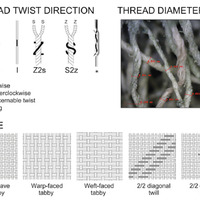 Structural parameters recorded during textile analysis (processing M. Gleba)
 -
 a) Close-up of the fragment showing the preservation of textile traces; b) SEM micrographs of positive fibre casts of finer and one coarse fibre; c) the macro photograph; d) the very high density point cloud acquired with a structured light scanner (processing M. Gleba and E. Faresin)
 -
 Comparison between the macro photograph (on the left) and the high-resolution 3D model (on the right) (processing E. Faresin)
Position: 8157 (24 views)